+44 (0) 208 9056847
+44 (0) 7957 430081

By admin/February 22, 2026/Comments are closed
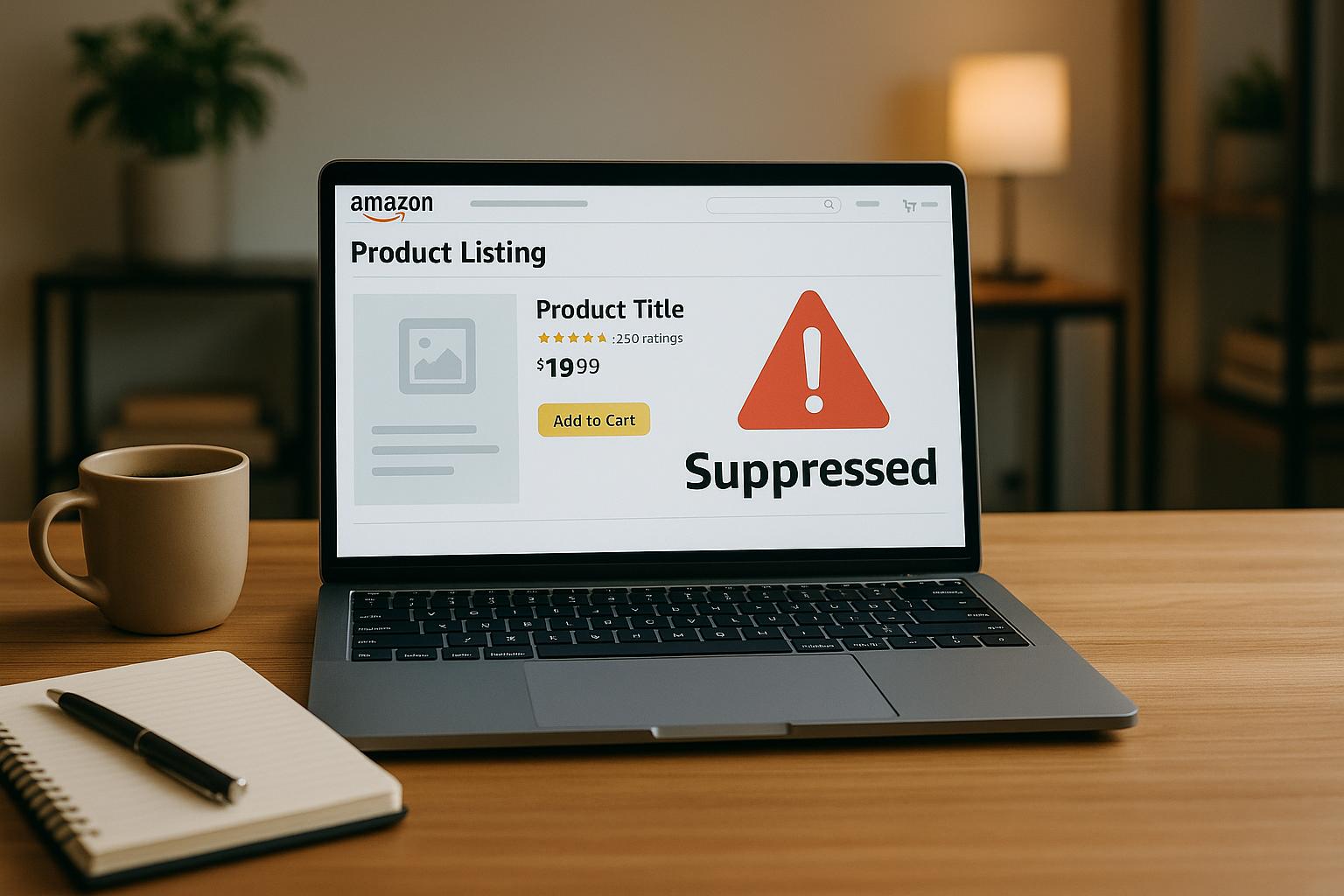
For Amazon sellers, inactive or suppressed listings can significantly impact sales and revenue. Listings may be hidden from search results, preventing customers from finding products, and in some cases, this can lead to lost visibility for weeks. Understanding why listings become inactive or suppressed and knowing how to recover them quickly is essential for maintaining account health and driving sales.
Amazon listings may be deactivated or suppressed for various reasons, often tied to compliance, quality, or account performance. The most common causes include:
Amazon requires complete and accurate product data. Listings may be suppressed if:
Prevention Tip: Regularly audit your product listings to ensure all required fields are complete and accurate.
Listings that violate Amazon’s guidelines or policies may be suppressed until corrections are made. Common violations include:
Prevention Tip: Stay updated with Amazon’s product listing policies and review listings after any platform updates.
Amazon protects intellectual property rights closely. A listing can be suppressed if:
Prevention Tip: Ensure all products have the necessary permissions, and use Amazon’s Brand Registry if applicable.
A listing can become inactive if stock levels are low or fulfillment metrics fall short. Common causes include:
Prevention Tip: Maintain accurate inventory tracking and set alerts for low-stock situations.
High return rates, negative reviews, or customer complaints may trigger listing suppression. Amazon uses these signals to protect the customer experience.
Prevention Tip: Monitor feedback regularly and resolve issues quickly. Ensure products meet quality standards before shipping.
Recovery requires a systematic approach. Acting promptly increases the chances of reinstatement and minimizes revenue loss.
Understanding the exact cause is the first step in effective recovery.
Depending on the issue:
After corrections, re-submit the listing for review.
If the listing was suppressed due to a policy or intellectual property complaint:
A clear, data-backed POA increases the chances of quick reinstatement.
For stock or fulfillment-related suppression:
Maintaining a buffer stock can prevent repeated suppressions in the future.
For listings suppressed due to negative reviews or returns:
Reducing recurring negative signals helps restore listing visibility and prevents future suppressions.
Document all corrections to provide a clear record if further review is required.
Once a listing is reinstated, prevention is key. Successful sellers implement proactive strategies:
Proactive measures reduce the risk of repeated listing suppression and contribute to long-term account health.
Sellers who implement proactive listing management and monitoring see measurable results:
In essence, consistent oversight and immediate corrective action help protect revenue and maintain platform trust.
Inactive or suppressed Amazon listings can have a significant impact on sales and account health. Common causes include missing product information, policy violations, IP issues, inventory shortages, and customer complaints. Recovery requires understanding the root cause, correcting errors, submitting clear plans of action, and monitoring customer and account performance closely.
Prevention, however, is always better than recovery. Continuous listing audits, automated alerts, policy compliance checks, and inventory management ensure that listings remain active and visible, supporting long-term account health and sales growth. By taking a proactive approach, Amazon sellers can minimize downtime, protect revenue, and maintain a strong presence in the marketplace.

Established in 2021, Amazon Global Appeals provides global assistance for Amazon sellers, specializing in consultations for account suspensions, restrictions, and reinstatements with an impressive 95% success ratio.


